




Understanding the Rhinoplasty Process
Rhinoplasty, commonly known as a nose reshaping procedure, is performed to improve the appearance of the nose, enhance breathing, or address both cosmetic and functional concerns. Understanding each step of the rhinoplasty process can help you feel informed and confident about your treatment journey.
Step 1: Initial Consultation
Your rhinoplasty journey begins with a comprehensive consultation. During this appointment, your Dr. Peter J. Abramson will:
- Discuss your aesthetic goals and medical history.
- Evaluate your nasal structure, facial proportions, and skin quality.
- Assess your breathing and nasal function.
- Explain the recommended surgical approach and expected outcomes.
- Review potential risks, benefits, and recovery expectations.
Photos will be taken using our computer imaging system to assist with surgical planning and to help visualize your desired results.


Step 2: Personalized Surgical Planning
Based on your consultation, Dr. Abramson creates a customized treatment plan tailored to your facial anatomy and goals. The plan includes:
- The surgical technique (open or closed rhinoplasty).
- Areas of the nose that will be reshaped.
- Functional corrections, if needed.
- Anesthesia recommendations.
Every rhinoplasty procedure is designed to achieve balanced, natural-looking results while preserving or improving nasal function.
Step 3: Day of Surgery
On the day of your procedure:
- You will meet with your surgical team.
- Anesthesia will be administered to ensure your comfort.
- Dr. Abramson will make carefully placed incisions using the planned technique.
- Bone, cartilage, or soft tissue will be reshaped as needed.
- Structural support may be added using cartilage grafts when appropriate.
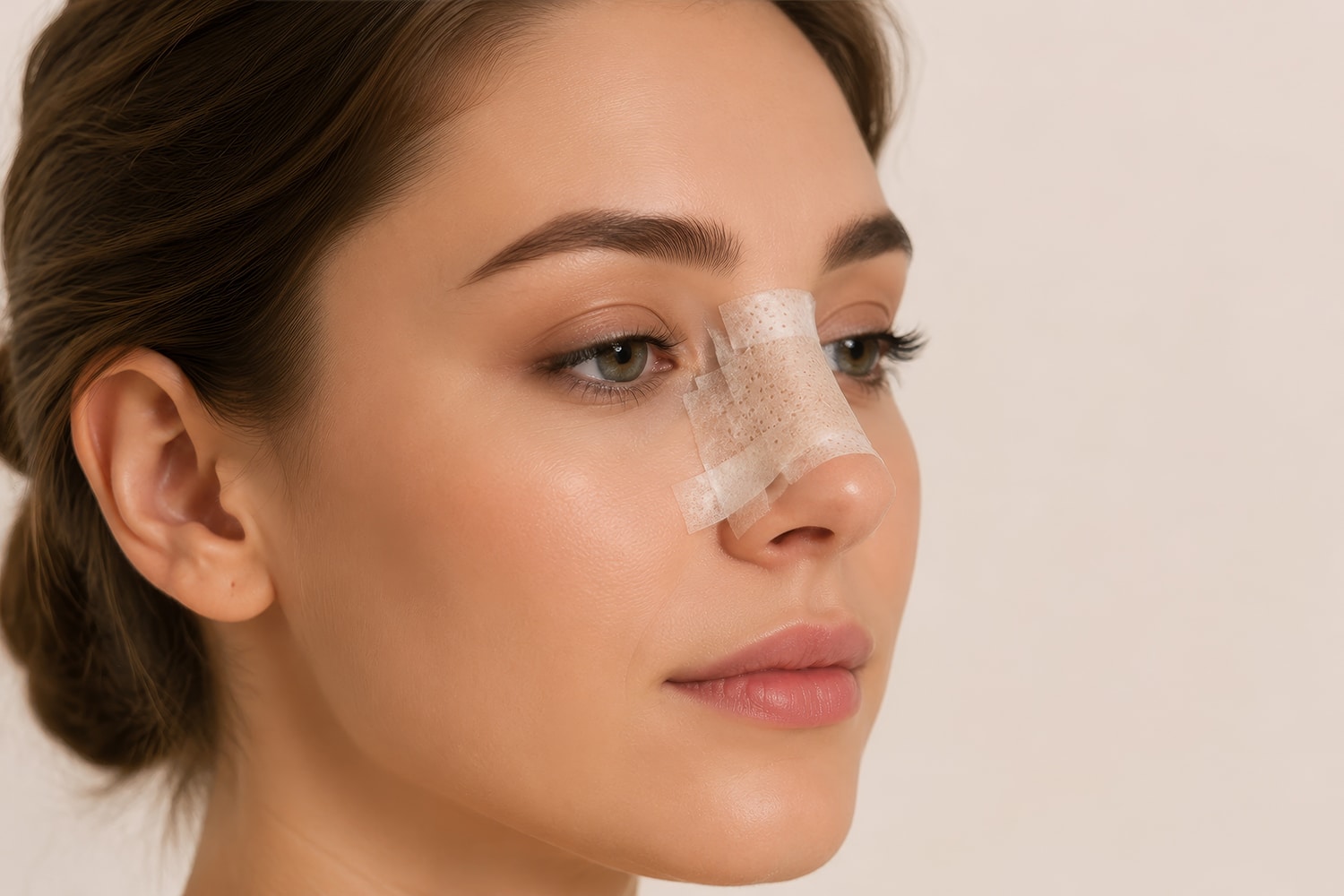
- Once the desired shape is achieved, the incisions are closed and a protective splint is placed over the nose.
The procedure typically takes between 1.5 and 3 hours, depending on its complexity.
Step 4: Recovery After Surgery
Following your procedure, you will spend a short period in recovery before returning home with detailed aftercare instructions.
During the first week, you may experience:
- Mild swelling and bruising around the eyes.
- Nasal congestion.
- Minor discomfort, which is usually manageable with prescribed medication.
The nasal splint is generally removed after approximately one week.
Step 5: Healing and Follow-Up Visits
Dr. Abramson will schedule follow-up appointments to monitor your healing and ensure your recovery is progressing as expected.
Most patients:
- Return to work or school within 1–2 weeks.
- Resume light exercise after a few weeks, as advised by Dr. Abramson.
- Notice significant improvement in swelling within the first few months.
- Continue to see subtle refinements as the nose heals over 12–18 months.



Long-Term Results
Rhinoplasty provides long-lasting improvements in both appearance and function. While initial changes are visible soon after surgery, the final results develop gradually as swelling resolves.
Choosing a qualified, experienced surgeon and following all postoperative instructions are essential for achieving the best possible outcome.
In this video, Dr. Peter Abramson explains the rhinoplasty process of your procedure.
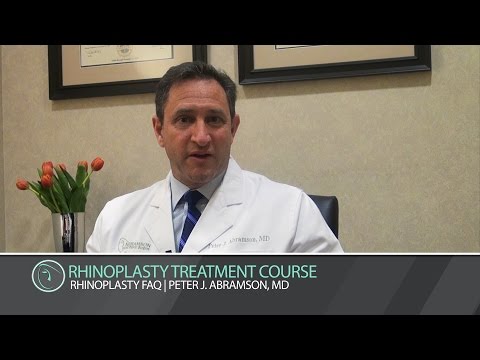
In this video, Dr. Abramson explains the rhinoplasty process from the consultation, pre-op and post-op requirements, the surgical procedure, and recovery.
After our consultation and examination, and we’ve gotten to the point where we are proceeding with the nose reshaping surgery, patients will come in for a preoperative evaluation and discussion. At that time, which usually occurs somewhere around 2 weeks prior to the procedure, we will sit down and I will do a re-evaluation, as well as discuss the goals we both have, and then at that time go through some of the things that the patient can expect before, during, and in the postoperative time period. We also at that time do quite a bit of paperwork, going over some of the technical details of the procedure as well as consent forms and preoperative and postoperative instructions. The patients will get their pre and postoperative medications at that time, which usually involves some anti-nauseal medication, on occasion some antibiotics, and usually a prescription strength pain medicine.
At the same time, our assistant will go over some of the postoperative care that the patients will need to do, and will provide the patient with a post-op kit that includes almost, if not all of the things that they will need at home postoperatively. We also encourage patients to not take any supplemental medications that are not prescription. In particular, any nutritional supplements or even any vitamins unless they are prescription strength. This reduces our risk of having excess bleeding during or after the surgery. I used to have a 2-3 page list of all the medications that we knew of that created a postoperative or intraoperative bleeding issue for us, but what I do with the patients is go through their medication list to determine what challenges we may face, such as blood thinners, such as aspirin or ibuprofen, that we generally recommend patients not take two weeks prior to the procedure. There are some patients that have to take these for certain medical issues and we can go through those with the patient or even their primary doctor or if necessary their cardiology team.
After surgery, we generally recommend that the patients take ibuprofen if necessary as we have not seen it increasing the risk of bleeding in our postoperative Rhinoplasty patients. Also, postoperatively, cleaning instructions which our nurses will provide for you are very basic and easy to accomplish. After surgery, one week later, we will see you in the office and go over any of the questions you may have as well as remove the splints that my be inside the nose or the cast on top of the nose. I rarely if ever put any nasal packing in the nose and if I do, it’s a pad that dissolves on it’s own with nasal saline irrigation or when you come back in and I suction the nose. At that time it is not painful, and not the same packing that many patients have heard of in past years of Rhinoplasty that has to be removed.