

Immediate Post-Operative Phase (First Week)
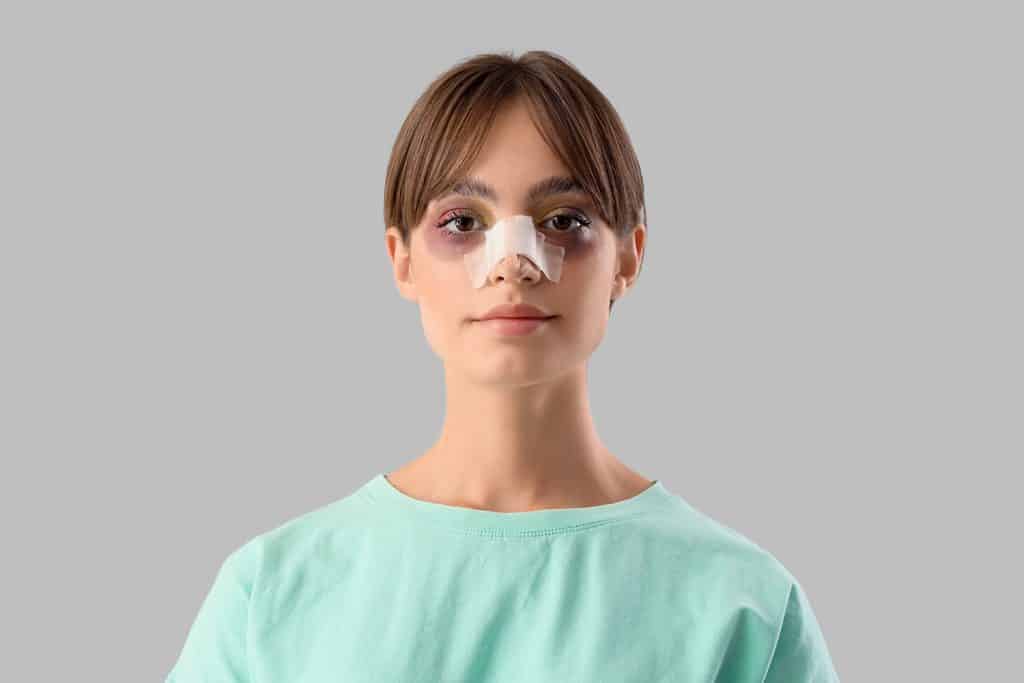
The first week after rhinoplasty is the most challenging. Patients experience peak swelling, bruising around the eyes, nasal congestion, and drainage from your nose. This is normal and a drip pad may be used for the first 24-48 hours. The discomfort is minimal and can usually be managed with over-the-counter medication. A nasal splint is typically worn to protect the nose, and internal splints or soft packing may stabilize the septum.


Weeks 3-4
By the second and third weeks, swelling has begun to subside, bruising fades, and most patients feel comfortable enough to return to work and some social activities. The external splint is usually removed around day 7, and subtle improvements in nasal shape start to become noticeable. Patients should avoid strenous exercise and keep glasses off the nasal bridge for 4-6 weeks to prevent shifting and healing bones.
Weeks 4-6
During this period, patients can resume light exercise and normal daily activities. Swelling continues to decrease, but the nasal tip may remain slightly swollen, especially in patients with thicker skin or extensive tip work. You will probably look normal to others, though subtle refinements continue.


Months 2-6
Approximately 80-90% of swelling will greatly reduce within 3 months’ with the nasal tip taking the longest to refine. The nose continues to heal beneath the surface, with small contours sharpening and firmness easing over time. Gradual improvements continue that you will begin to notice.
Months 6-18
As you enter into the 6th month, your nose will be more defined. By this point, your nasal structure will showcase its new shape more prominently.
During this phase, the skin and underlying tissues fully adapt to the new nasal framework. Any residual swelling or numbness inside the nose will gradually fade.
By the one-year mark, your rhinoplasty journey reaches its conclusion. Your nose will completely heal, achieving its final shape and harmonizing beautifully with your facial features. Intricate changes, such as those made to the nasal tip or during revision rhinoplasty, may take the full year to settle completely.
Rhinoplasty, What to Expect After Surgery
Full Recovery from Rhinoplasty Surgery Typically Takes 12-18 Months.
Choosing an Experienced Rhinoplasty Surgeon
One of the best ways to minimize complications is selecting a qualified and experienced rhinoplasty specialist. Careful surgical planning, realistic expectations, and proper post-operative care all play an important role in achieving successful results.
Patients considering rhinoplasty should schedule a thorough consultation with Peter J. Abramson to discuss goals, medical history, surgical options, and potential risks before proceeding with surgery.



Rhinoplasty,What to Expect
In this video, Dr. Abramson answers frequently asked questions about the first week after Rhinoplasty:
1. When can you leave the house?
2. How can you minimize discomfort while sleeping?
“One of the most common questions we get asked is, when can I resume normal physical activities, such as exercising and getting outside of our house. Patients tend to get a little cabin fever if they stay inside for the full week after Rhinoplasty. I have no problem with my patients getting out there and a common place to go is to a movie theater where they may not run into their friends and they can sit in the back and watch a movie and be entertained, and get out of the house. The other thing that sometimes is difficult in the postoperative period is some nasal airway obstruction. As you can imagine having surgery that involves the inside of the nose does create some swelling that can give some nasal airway obstruction. Where that is more often than not felt is during sleep. So, mouth can get dry, and sometimes it’s a little difficult to sleep. So, we always have some recommendations for the patients postoperatively, particularly reviewed in our postoperative session, such as: keeping a glass of water by the side of the bed, keeping some ice chips, or a humidifier in the room.”
Dr. Abramson performs Rhinoplasty procedures in his own surgical suite in Atlanta, GA, a convenient drive for those in Buckhead, Dunwoody, Sandy Springs, Marietta, Roswell, Alpharetta and beyond.