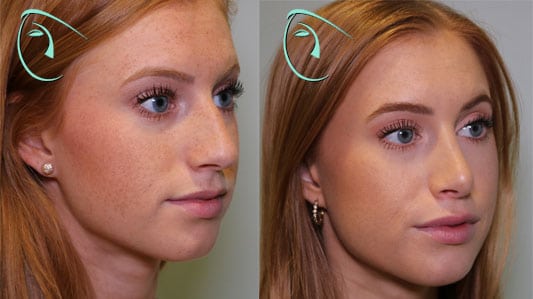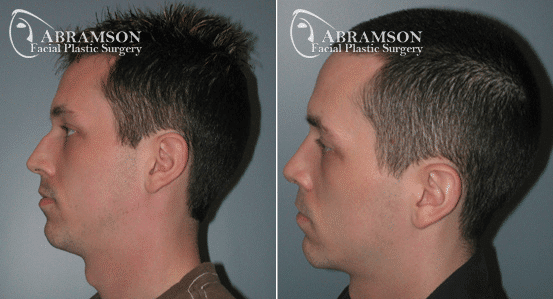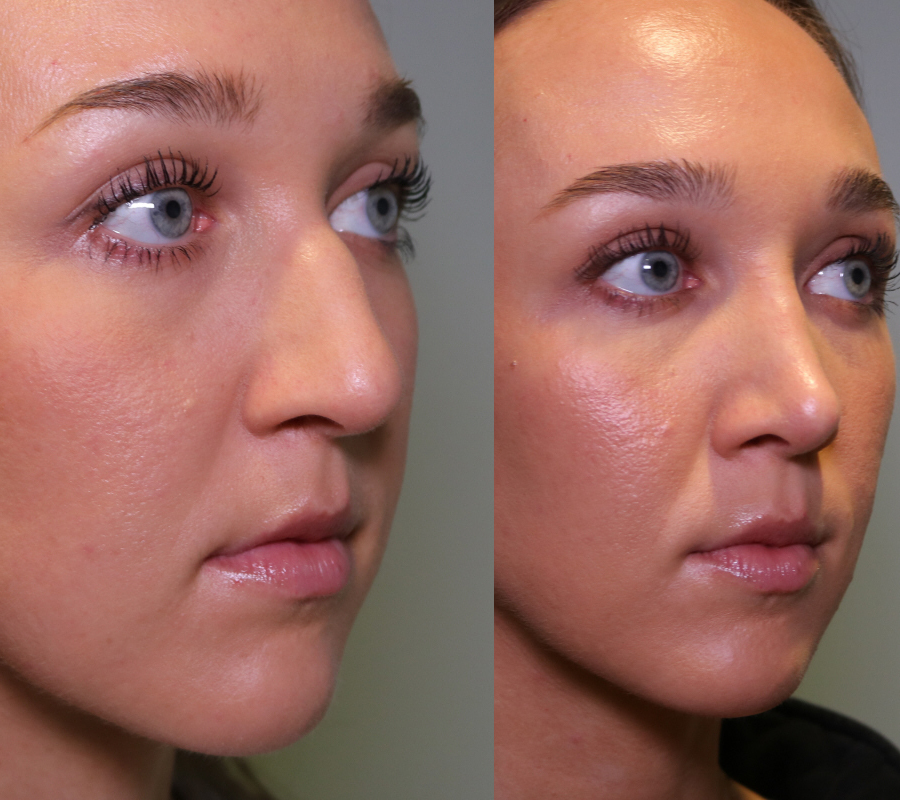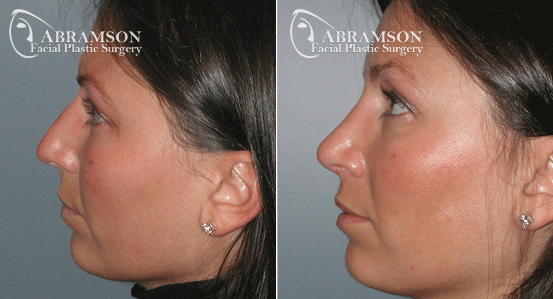

What is a Dorsal Hump?
This is prominent bump along the bridge of the nose that can make the profile appear more pronounced. Rhinoplasty can smooth the bridge while maintaining the unique character of your face. It is also referred to as the dorsal nose bump and is formed due to certain irregularities in the underlying nose cartilage or bone. This feature is a common genetic characteristic that could have been passed down from a parent or as a result of an injury inflicted on the nose. Some injuries to the nose can also result in a humped nose.
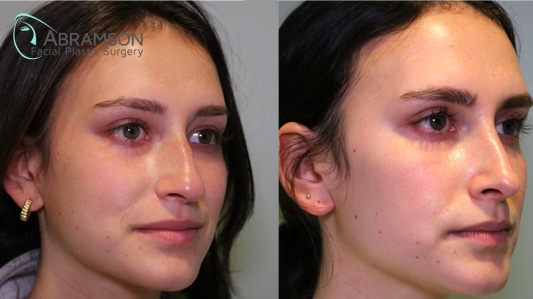
Dorsal Hump Removal (Roman Nose Correction)
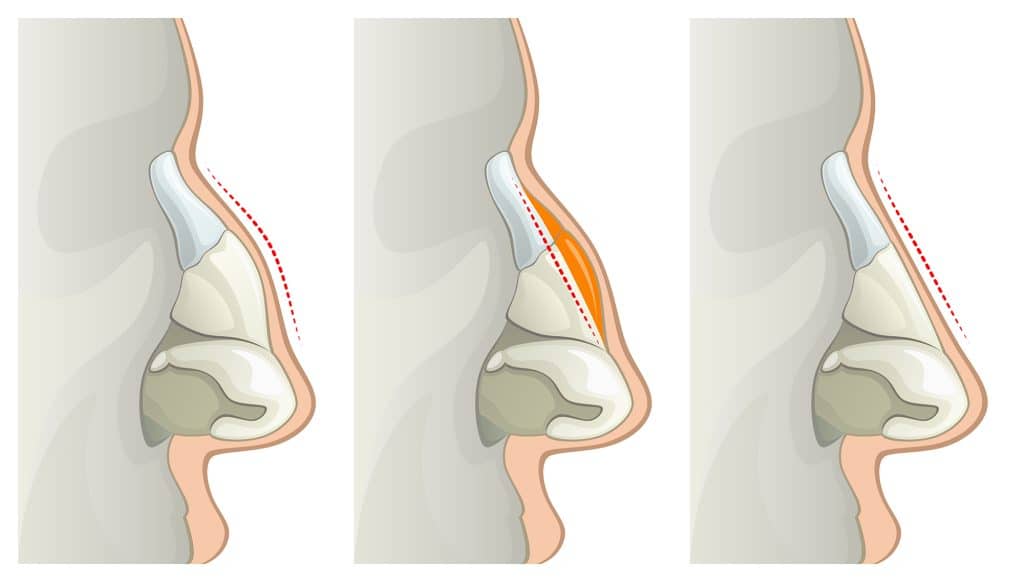
Dorsal hump removal is a surgical procedure performed via rhinoplasty to shave or sculpt away excess bone and cartilage on the bridge of the nose. Operating time typically takes 1 to 3 hours under general anesthesia, followed by a one-week recovery with a nasal splint.
Approach: Dr. Abramson may use either an open approach or a closed approach. He will determine which method is best for your unique situation. In the open approach he will make a small external cut on the tissue between nostrils. In a closed approach the incisions are hidden inside the nostrils.
Reduction: Specialized instruments like rasps or chisels file down bone, while scalpels trim excess cartilage.
Osteotomy: If removing the hump widens the bridge, Dr. Abramson makes controlled bone cuts to reset and narrow the nasal bones.
Grafting: Cartilage grafts may be added to support the middle valve and keep the airway stable.
Ultrasonic (Piezo) Rhinoplasty
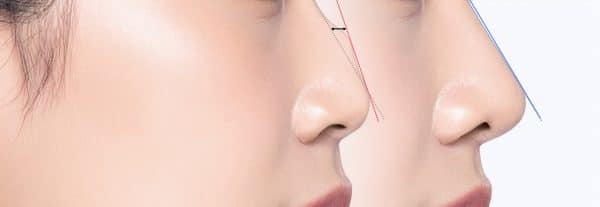
Ultrasonic rhinoplasty uses piezoelectric instruments to reshape nasal bone using ultrasonic vibration rather than traditional cutting tools. The advantage is greater precision when working on bone, with less trauma to surrounding soft tissue. Dr Abramson uses this technique for selected cases where precise bone contouring is needed. It is an approach to bone management within rhinoplasty, not a standalone procedure.

Recovery From a Dorsal Hump Correction Via Rhinoplasty
Recovery from a dorsal hump correction via rhinoplasty takes about one to two weeks for initial healing, with residual swelling slowly fading over six to twelve months. Expect a nasal splint for the first week, peak bruising and swelling around the eyes and nose for three days, and a gradual return to normal routines. Patients are usually pleased with the early result and find that continued improvement over the following months is a welcome process.