
Open Rhinoplasty vs. Closed Rhinoplasty: A Complete Guide
Rhinoplasty—commonly known as a “nose job”—is one of the most precise and personalized forms of cosmetic and reconstructive surgery. One of the most important decisions in the process is choosing between open rhinoplasty and closed rhinoplasty. While both approaches aim to reshape the nose for aesthetic or functional improvement, they differ significantly in technique, visibility, recovery, and suitability.
Understanding Open vs. Closed Rhinoplasty
At the most basic level, the difference comes down to how the surgeon accesses the nasal structures:
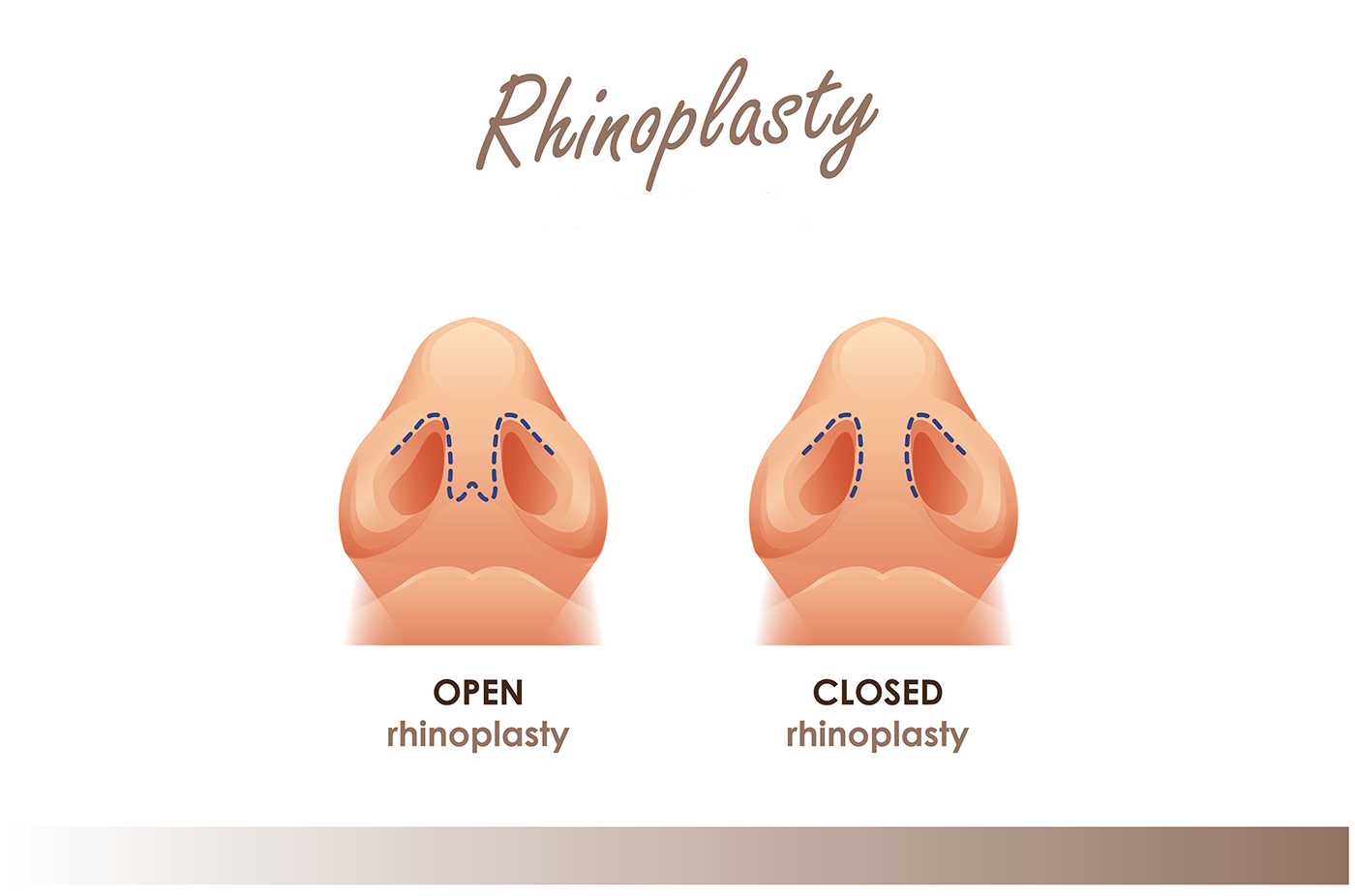
- Open rhinoplasty involves a small external incision across the columella (the strip of tissue between the nostrils), allowing the skin to be lifted for full visibility.
- Closed rhinoplasty (also called endonasal rhinoplasty) is performed entirely through incisions inside the nostrils, leaving no visible external scar.
Both techniques can achieve excellent results—the “better” option depends on your anatomy, goals, and the complexity of the procedure. Dr. Peter Abramson will discuss with you in detail your options at your consultation and help you make the right decision based on your goals and desired outcome.
What Is Open Rhinoplasty?
Open rhinoplasty is often considered the more detailed and versatile approach.
Key Features:
- Small incision made across the columella
- Nasal skin is lifted, exposing the underlying cartilage and bone
- Provides a direct, unobstructed view of nasal structures
When It’s Typically Used:
- Complex reshaping
- Revision (secondary) rhinoplasty
- Significant asymmetry or structural deformities
- Major tip reshaping
What Is Closed Rhinoplasty?
Closed rhinoplasty is a less invasive technique where all incisions are hidden inside the nostrils.
Key Features:
- No external incision
- Limited visibility compared to open technique
- All work is done through internal access points
When It’s Typically Used:
- Minor reshaping
- Small dorsal hump removal
- Subtle refinements
- Patients wanting no visible scar
Open Rhinoplasty vs. Closed Rhinoplasty: Key Differences
1. Surgical Visibility & Precision
Open rhinoplasty provides Dr. Peter Abramson with a clear, direct view of the nasal anatomy. This visibility allows for greater precision, especially in complex cases involving structural changes or asymmetry.
Closed rhinoplasty offers more limited visibility since all work is performed through internal incisions. However, in the hands of an experienced surgeon like Dr. Abramson, it can still deliver excellent results for simpler refinements.
2. Scarring
One of the most common concerns for patients is scarring.
- Open Rhinoplasty: Leaves a very small scar on the columella. In most cases, this scar heals extremely well and becomes barely noticeable over time.
- Closed Rhinoplasty: No external scar, as all incisions are hidden within the nostrils.
3. Swelling & Recovery Time
Recovery varies depending on the technique used.
- Open Rhinoplasty: Typically involves more swelling, especially in the nasal tip, and may take longer for final results to fully appear.
- Closed Rhinoplasty: Usually results in less swelling and a slightly faster initial recovery.
That said, both procedures generally allow patients to return to normal daily activities within 1–2 weeks, with final results developing over several months.
4. Surgical Complexity
- Open Rhinoplasty: Preferred for more complex or revision procedures where structural changes are required.
- Closed Rhinoplasty: Best suited for minor adjustments and patients seeking subtle changes.
Pros and Cons of Each Approach
Open Rhinoplasty
Pros:
- Maximum visibility and control
- Ideal for complex or revision cases
- Greater precision in reshaping
Cons:
- Slightly longer surgery time
- More swelling during recovery
- Small external scar (usually minimal)
Closed Rhinoplasty
Pros:
- No visible external scarring
- Shorter surgery time
- Less swelling and quicker recovery
Cons:
- Limited visibility for the surgeon
- Not ideal for complex structural changes
- May not be suitable for revision cases
Which Rhinoplasty Technique Is Right for You?
Choosing between open and closed rhinoplasty is not about which technique is “better”—it’s about which is most appropriate for your unique anatomy and goals.
Factors your surgeon will consider include:
- The shape and structure of your nose
- Whether this is a primary or revision rhinoplasty
- The degree of change you want to achieve
- Functional concerns such as breathing issues

During your consultation, Dr. Peter Abramson will evaluate your nasal structure, discuss your aesthetic goals, and recommend the approach that will deliver the most natural-looking, long-lasting results.
What to Expect During Recovery
Regardless of the technique used, most patients can expect:
- Mild to moderate swelling and bruising for the first 1–2 weeks
- A nasal splint worn for about one week
- Gradual improvement in swelling over several months
- Final results becoming fully visible within 6–12 months
Following all post-operative instructions carefully will help ensure optimal healing and the best possible outcome.
Both open and closed rhinoplasty are highly effective techniques when performed by a skilled, experienced surgeon. The key is not the method itself, but the expertise behind it and the personalized approach to your care.
If you’re considering rhinoplasty, scheduling a consultation with Dr. Abramson is the best first step toward understanding your options and achieving results that enhance both your appearance and confidence.