Saddle Nose Rhinoplasty in Atlanta, GA
Restoring Nasal Bridge Structure, Facial Balance, and Breathing Function
A saddle nose deformity occurs when the bridge of the nose loses structural support, creating a noticeable depression or sunken appearance along the nasal profile. Depending on its severity, this condition can affect both the appearance of the nose and the ability to breathe comfortably.
Saddle nose rhinoplasty is a specialized form of nasal reconstruction designed to restore the height, shape, and structural integrity of the nasal bridge.
At Abramson Facial Plastic Surgery Center in Atlanta, Georgia, double board-certified facial plastic surgeon Peter J. Abramson, M.D., evaluates nasal deformities with attention to both cosmetic appearance and functional concerns. His background in otolaryngology and facial plastic surgery provides an important foundation for addressing the complex relationship between nasal anatomy, structural support, and breathing.


What Is a Saddle Nose Deformity?
A saddle nose deformity, sometimes called nasal bridge collapse, develops when the cartilage or bone supporting the middle portion of the nose becomes weakened, damaged, or displaced.
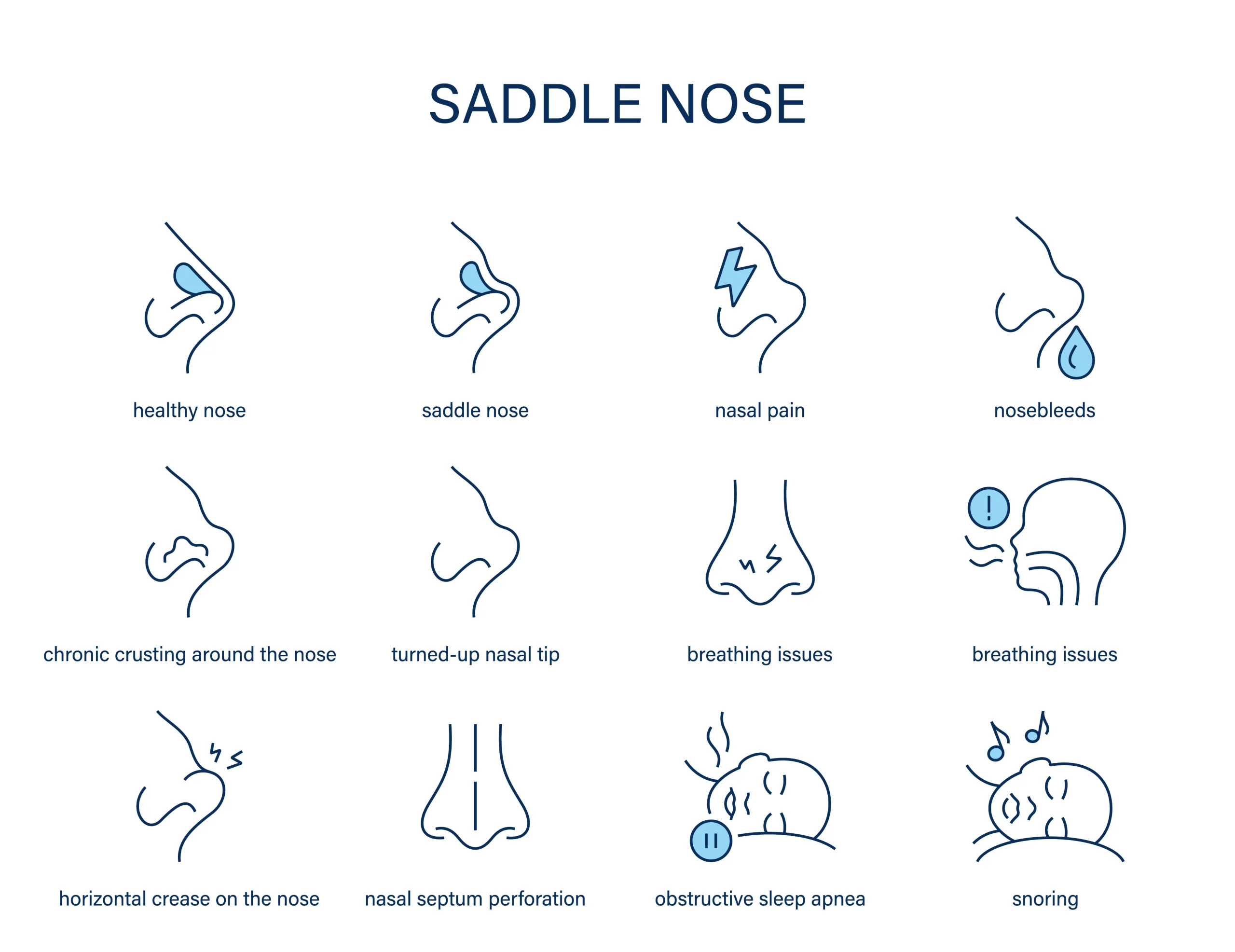
Viewed from the side, the nasal bridge may appear to dip inward rather than maintaining a smooth, continuous contour. In more pronounced cases, the nasal tip may rotate upward, making the nose appear shorter or flatter.
Common characteristics include:
- A visible depression or indentation along the nasal bridge
- A flattened or collapsed middle portion of the nose
- An upward rotation of the nasal tip
- An appearance of reduced nasal length
- Nasal asymmetry or irregular contours
- Difficulty breathing through one or both nostrils
The degree of deformity varies considerably. Some patients experience a relatively minor depression, while others have substantial loss of nasal support requiring reconstructive surgery.
A pronounced saddle nose deformity can be a very difficult condition for a patient, especially when it develops after previous surgery or an injury. Beyond the cosmetic changes, there can be serious structural and breathing problems. That’s what makes this kind of rhinoplasty different than a bulbous tip or dorsal hump rhinoplasty. With those procedures, the patient is often seeking cosmetic refinement. With saddle nose, the patient may need reconstruction of the nasal framework, sometimes using cartilage grafts to rebuild the bridge.
How Can Rhinoplasty Correct a Collapsed Nasal Bridge?
Unlike rhinoplasty procedures that primarily reduce the size of the nose or remove a dorsal hump, saddle nose correction often requires rebuilding and strengthening the nasal framework.
The surgical approach depends on the extent of structural damage, the condition of the nasal septum, and the patient’s individual anatomy.
Cartilage Grafting
Cartilage grafts may be used to restore the nasal bridge and provide additional structural support. Depending on the patient’s needs, graft material may be obtained from the nasal septum, ear, or rib.
Nasal Bridge Reconstruction
Reconstructive techniques can restore height and contour to the depressed nasal bridge while helping establish a stable supporting framework.
Nasal Tip Support
When loss of structural support has affected the position or projection of the nasal tip, additional techniques may be necessary to improve balance between the bridge and tip.
Functional Nasal Reconstruction
In patients who experience breathing difficulties, surgery may also address structural problems contributing to nasal obstruction.
The objective is not simply to improve the nasal profile, but to create a stable, functional nose that complements the patient’s facial features.
Saddle Nose Deformity After Revision Rhinoplasty
A saddle nose deformity that develops following an earlier nasal procedure can be particularly challenging to correct.
Previous surgery may have altered the normal anatomy, reduced the available cartilage, or produced scar tissue. These factors can make reconstructive surgery more complex than primary rhinoplasty.
Dr. Peter Jay Abramson is an expert in revision rhinoplasty. He is double board certified by the American Board of Otolaryngology and the American Board of Facial Plastic and Reconstructive Surgery. Many doctors across the country refer their patients to Dr. Abramson because of his 30 years of experience in performing hundreds of these surgeries.
if revision rhinoplasty is needed it may involve restoring missing structural support, rebuilding the nasal bridge, and correcting associated breathing problems.
For patients considering revision rhinoplasty in Atlanta, a detailed evaluation is essential to determine the extent of the deformity and the most appropriate treatment options. This evaluation is done during a consultation with Dr. Abramson where he will discuss your options in having a revision rhinoplasty to correct the many issues concerning a saddle nose.
What to Expect During Recovery
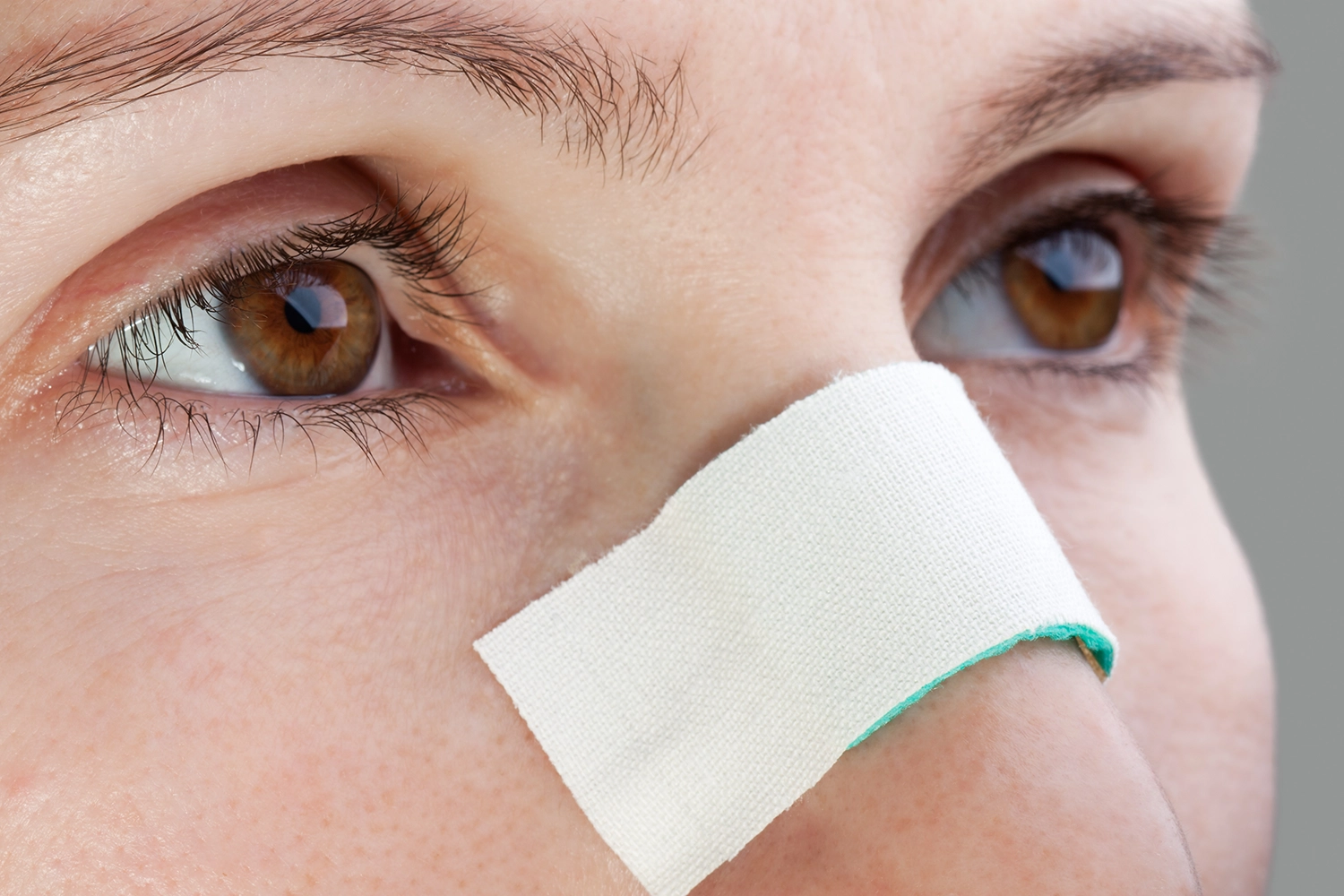
Recovery following saddle nose rhinoplasty depends on the complexity of the reconstruction and whether cartilage grafts or additional surgical techniques are required.
Patients can generally expect some swelling, bruising, and temporary nasal congestion during the initial healing period.
Many patients resume routine nonstrenuous activities within approximately one to two weeks, although recovery varies.
The nasal tissues continue to heal and refine over several months, and final results may take a year or longer to become apparent.
Dr. Abramson provides individualized postoperative instructions based on each patient’s procedure and recovery needs.